Long-range electronic warfare

Deny the navigation.
Defeat the threat.

J-05 is a fifth-generation long-range GNSS jamming and spoofing system. It denies the satellite navigation that drones, glide bombs and missiles rely on to reach their targets - across whole regions, not single sites.

5th generation J-series in combat since 2020 Armenia MoD approved
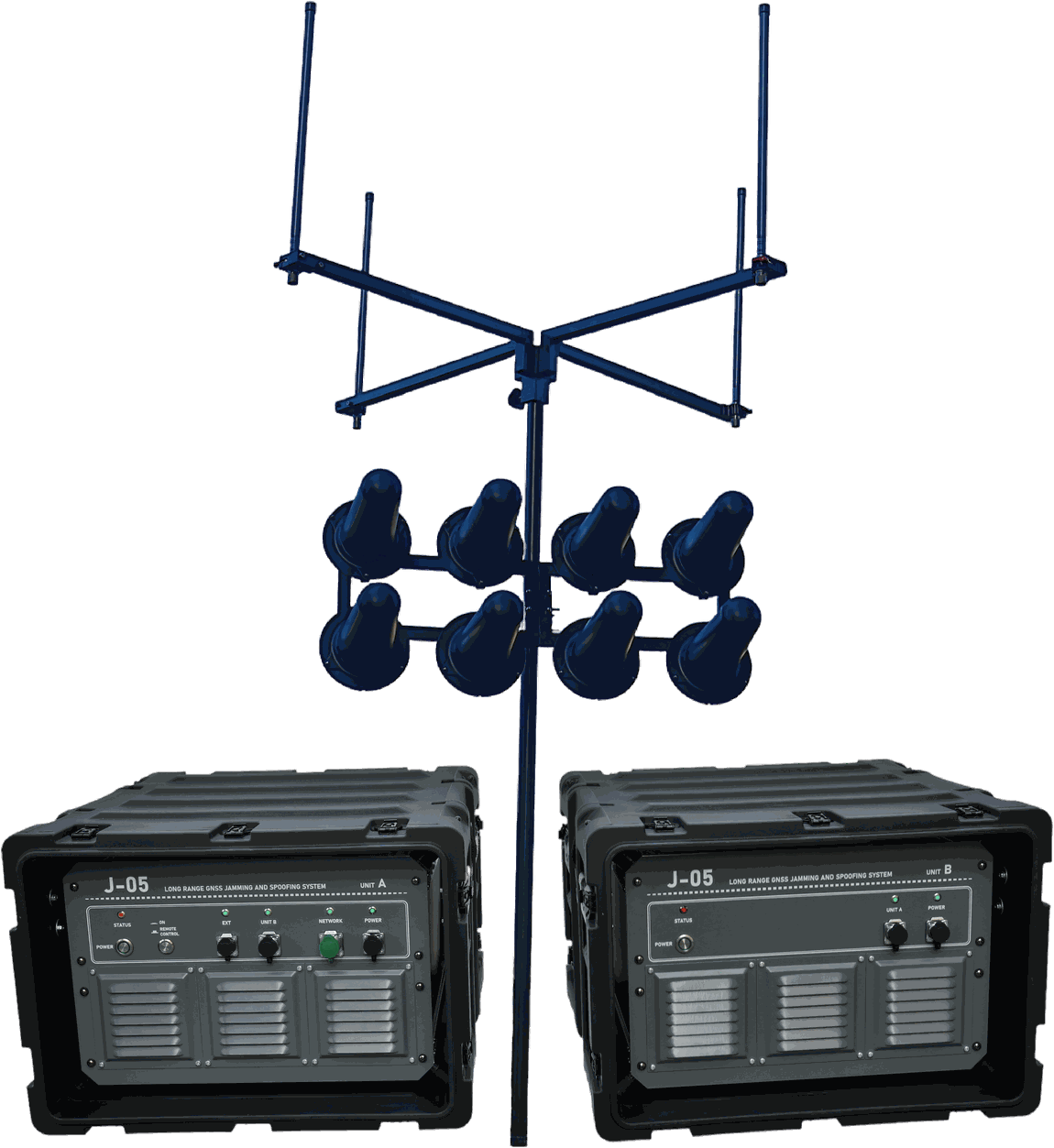
J-05 long-range GNSS jamming and spoofing system, two RF units with omnidirectional and directional antennas on a single mast
Scroll
80 km+
Effective range per unit,
directional antennas
Fewer units than short-range
jammers fielded today
10,000 km²
Protected by a single
jammer network
5
GNSS constellations
jammed and spoofed

The threat

Cheap, GNSS-guided, and arriving by the hundred

A new class of standoff weapon is defined by low cost and mass. Loitering munitions at $10,000 to $20,000 apiece, with over 1,000 km of range, launched from ordinary trucks. Old bombs fitted with guidance kits, striking from 100 km. Guided missiles and rocket artillery reaching 200 to 300 km.

01

Loitering munitions

Shahed-type UAVs. Cheap enough to send in waves, with published plans for 500 sorties per day.

02

Glide bombs

500 to 3,000 kg bombs fitted with folding-wing guidance kits. Fast, small and hard to intercept.

03

Guided missiles & MLRS

Long-range precision strike from behind the border, guided all the way by satellite.

Today's mass-raid threats share one dependency: GNSS. Deny it, and their guidance degrades. But no single effector answers 500 a day - the question is which layer does the heavy lifting, and at what cost.

The case for layered defence

No single effector wins - so layer them

A mass GNSS-guided raid cannot be met by any one tool. Modern defence layers effectors, and the widest layer has to be the cheapest to run.

GNSS DENIAL · J-05 wide area · cost per engagement ≈ electricity DIRECTED ENERGY local · low per shot incl. RF-silent / fibre-optic KINETIC 10-20× target cost ASSET 100 incoming raid ~20 survive - ~80% denied here ~5 survive ~1 leaker

Scroll the diagram sideways to see all layers.

Illustrative attrition of a 100-drone GNSS-guided raid. Layers shown per protected asset; J-05 deploys as a network.

J-05 is the wide-area foundation. It strips the GNSS-guided majority out of a raid at electricity-level cost, so directed-energy and kinetic shots only ever face what leaks through.

The system

Wide-area GNSS denial in one system

  • Jams and spoofs every GNSS. GPS, GLONASS, Galileo, BeiDou and IRNSS, across all bands.
  • Long reach. 30 to 40 km per unit with omnidirectional antennas, over 80 km directional.
  • Takes control, not just denies. Spoofing generates false coordinates to redirect or force-land a hostile drone.
  • Deploys anywhere. A two-unit system installs on light vehicles, vessels, rooftops or in a bunker.
  • Lighter and lower-power. SDR-based smart jamming needs less weight and power than equal-range systems that require heavy trucks.
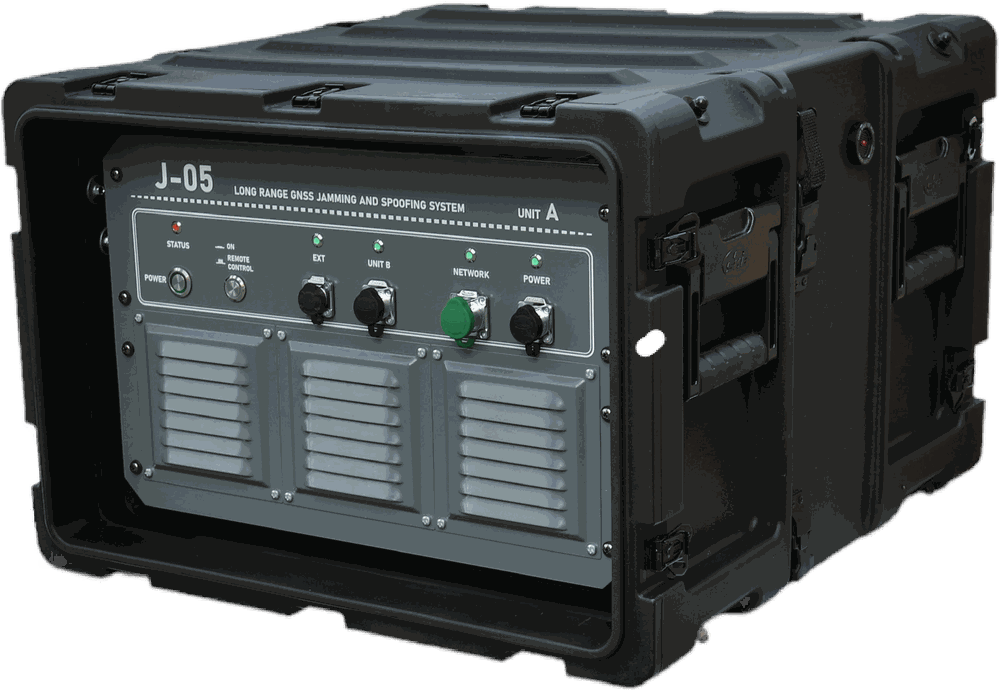
J-05 RF unit in a ruggedised transit case
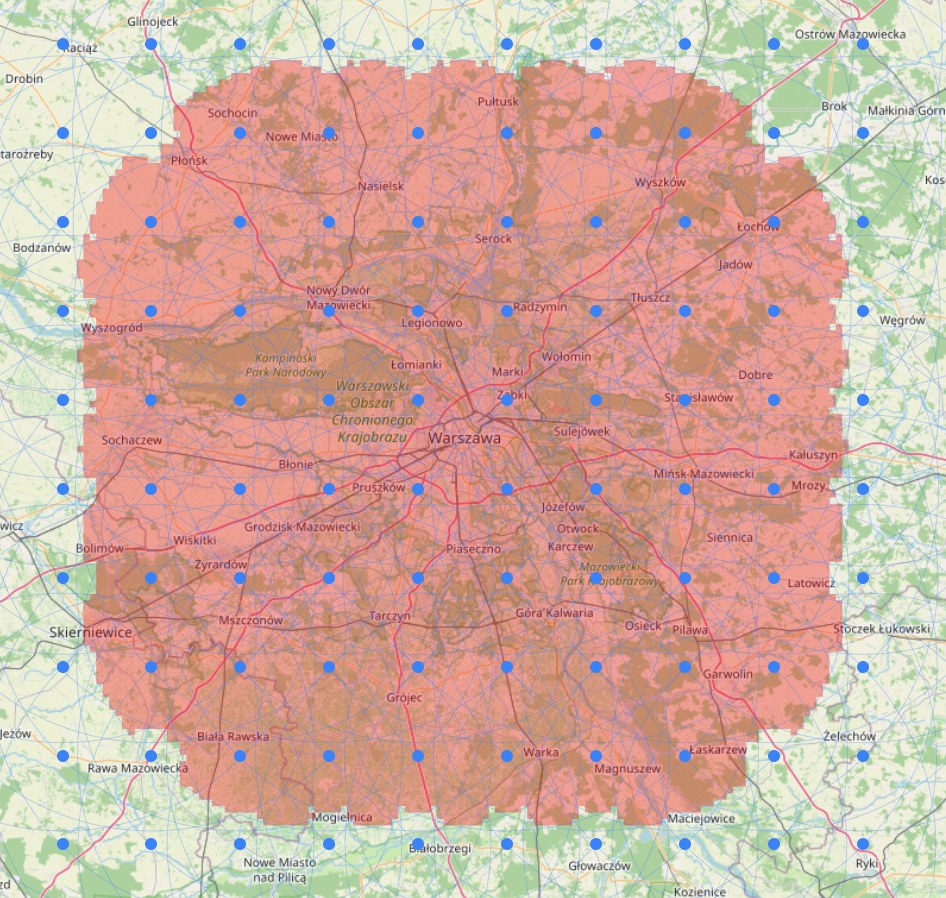
Modelled J-05 coverage over Warsaw showing a continuous denial footprint

Modelled coverage: approximately 100 J-05 units around Warsaw. Blue markers are jammer sites; the shaded area is where a 16-channel anti-jam receiver loses its fix.

Coverage

One network. Continuous, gap-free.

Because each unit reaches far, sites sit roughly 14 km apart with fully overlapping fields. There is no corridor for a drone to slip through.

  • Denial, not detection. Everywhere shaded, even the newest 16-channel anti-jam receiver loses its position fix.
  • Scales to any geography. The same grid wraps a city, a border or a whole country.
  • One operator. The entire network is monitored and commanded from a single console.

Operational record

Proven where it counts

The effect is not theoretical. It was demonstrated in a high-intensity drone war, and the lesson learned there is the reason J-05 exists. The engineering goes back more than a decade, now in its fifth generation.

2020

Fielded in combat

ADX's third-generation jammer, J-03, was deployed during the 2020 Nagorno-Karabakh war.

Loitering munition defeated

Credited with bringing down an advanced loitering munition. Airframe recovered and confirmed by Armenia's Ministry of Defence.

Artillery correction degraded

GNSS-guided artillery correction disrupted across repeated engagements.

The lesson was density. The effect worked wherever units were present, but there were far too few to hold a continuous field across the theatre. J-05 answers that directly: far greater reach per unit, so a network of roughly 100 holds 10,000 km².

Talk to us about protecting your airspace

Technical briefings, coverage modelling for your geography, and partnership options including technology transfer and local assembly.